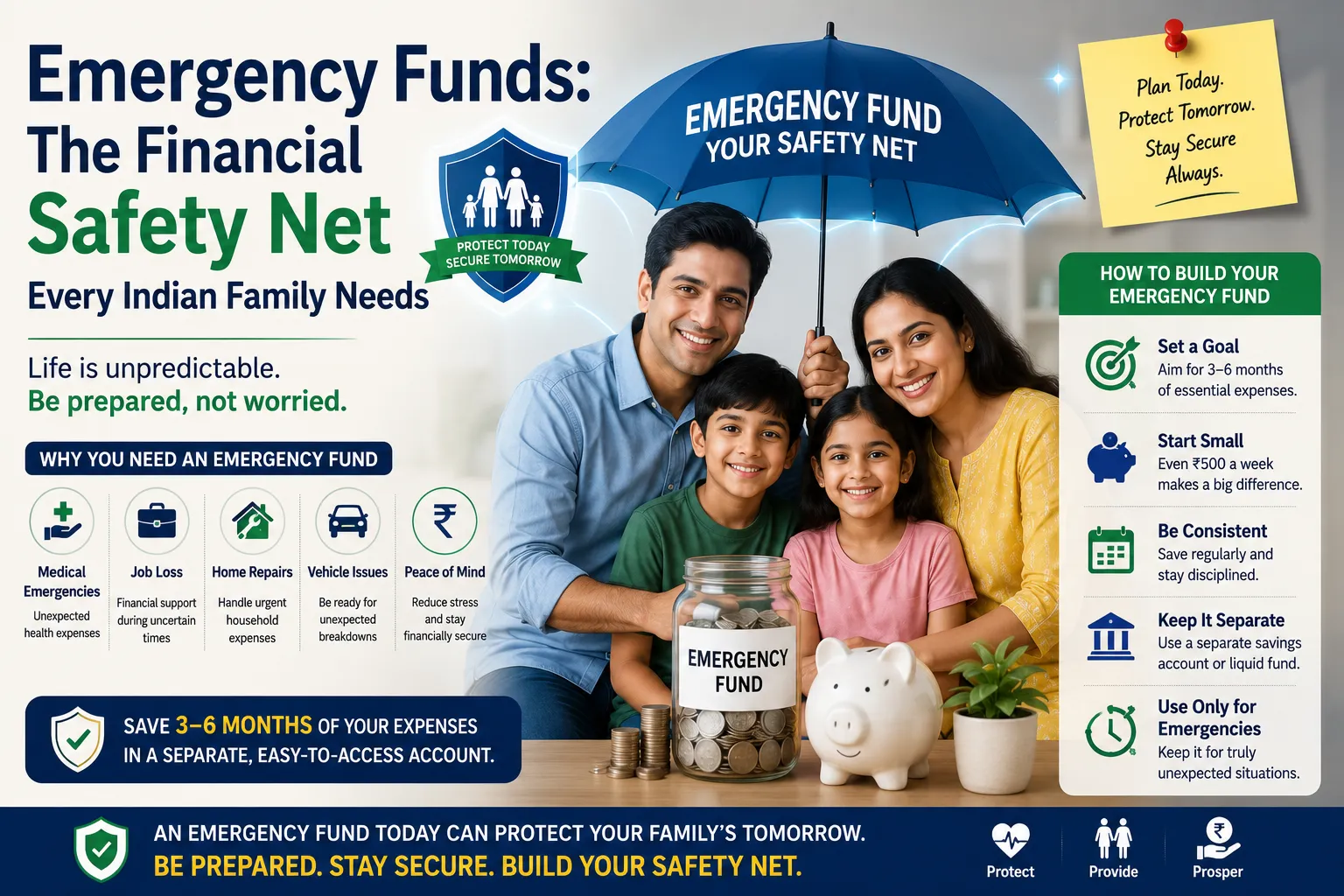
Emergency Funds: The Financial Safety Net Every Indian Family Needs

Most people spend years focusing on increasing their income, buying assets, and planning future investments. While these goals are important, there is one financial tool that often gets ignored until it becomes urgently necessary: an emergency fund.
An emergency fund is not designed to make you rich. It is designed to protect you when life becomes unpredictable. Whether it is an unexpected medical expense, a temporary loss of income, urgent home repairs, or another financial shock, having money set aside can prevent a difficult situation from becoming a financial crisis.
What Is an Emergency Fund?
An emergency fund is money kept aside specifically for unexpected expenses. It should be easily accessible and separate from funds allocated for investments, vacations, or major purchases.
The primary purpose of an emergency fund is financial stability. Instead of relying on credit cards, personal loans, or borrowing from friends and family, individuals can use their emergency savings to manage unforeseen situations.
Why Emergency Funds Are More Important Than Ever
The modern economy offers many opportunities, but it also comes with uncertainties. Industries change rapidly, businesses restructure, and unexpected expenses can appear without warning.
Many families discover that a single emergency can significantly affect their financial plans. Medical treatment, vehicle repairs, or temporary unemployment can quickly create financial pressure.
An emergency fund acts as a buffer that helps absorb these shocks without disrupting long-term goals.
How Much Should You Save?
There is no universal amount that works for everyone. However, many financial planners recommend maintaining savings equal to at least three to six months of essential expenses.
For example, if a household spends ₹40,000 per month on necessary expenses, an emergency fund of ₹1.2 lakh to ₹2.4 lakh may provide a reasonable level of protection.
Individuals with variable incomes, such as freelancers or business owners, may choose to save even more.
Common Emergencies That Require Savings
Many people assume emergencies are rare events. In reality, unexpected expenses are a normal part of life.
Examples include:
- Medical emergencies
- Temporary job loss
- Urgent home repairs
- Family emergencies
- Vehicle breakdowns
- Unexpected travel expenses
- Major appliance replacement
The goal is not to predict every problem but to be financially prepared when challenges arise.
Where Should Emergency Funds Be Kept?
Emergency funds should prioritize accessibility and safety over high returns.
Many people choose options such as:
- Savings accounts
- High-interest savings products
- Short-term deposits
- Highly liquid financial instruments
The objective is immediate availability rather than aggressive growth.
Money invested in volatile assets may lose value precisely when it is needed most.
Mistakes People Often Make
Treating Investments as Emergency Savings
Investments and emergency funds serve different purposes.
Selling investments during a market decline to cover urgent expenses can lead to unnecessary losses. Keeping a dedicated emergency fund helps avoid this situation.
Using Emergency Funds for Non-Emergencies
A new smartphone, holiday trip, or luxury purchase may be desirable, but they do not qualify as emergencies.
Emergency savings should remain reserved for genuine financial disruptions.
Waiting for the “Perfect Time” to Start
Many people postpone saving because they feel they cannot set aside a large amount immediately.
Building an emergency fund is a gradual process. Even small contributions made consistently can grow into meaningful protection over time.
How to Build an Emergency Fund Faster
The process becomes easier when broken into manageable steps.
Create a Savings Target
Determine how much protection you want based on monthly expenses.
Automate Contributions
Automatic transfers reduce the temptation to spend money elsewhere.
Save Windfalls
Bonuses, tax refunds, incentives, and unexpected income can accelerate progress.
Reduce Unnecessary Spending
Small lifestyle adjustments can free up additional money for savings without significantly affecting quality of life.
The Psychological Benefits
Emergency funds provide more than financial protection. They also reduce stress.
Knowing that money is available for unexpected situations often creates greater confidence and peace of mind. People are better able to focus on long-term opportunities when they are not constantly worried about short-term financial setbacks.
Financial security is not only about wealth. It is also about resilience.
Final Thoughts
An emergency fund may not be the most exciting part of a financial plan, but it is often one of the most important. It creates a foundation that supports every other financial goal.
Before pursuing complex investment strategies or ambitious financial targets, building a reliable emergency fund can provide the stability needed to handle life’s uncertainties with confidence.
Financial success is not only measured by how much money you earn. It is also measured by how well you are prepared for the unexpected.
Leave a Comment